Better City Life through Tourism
旅游让城市生活更美好
Better City Life through Tourism
旅游让城市生活更美好

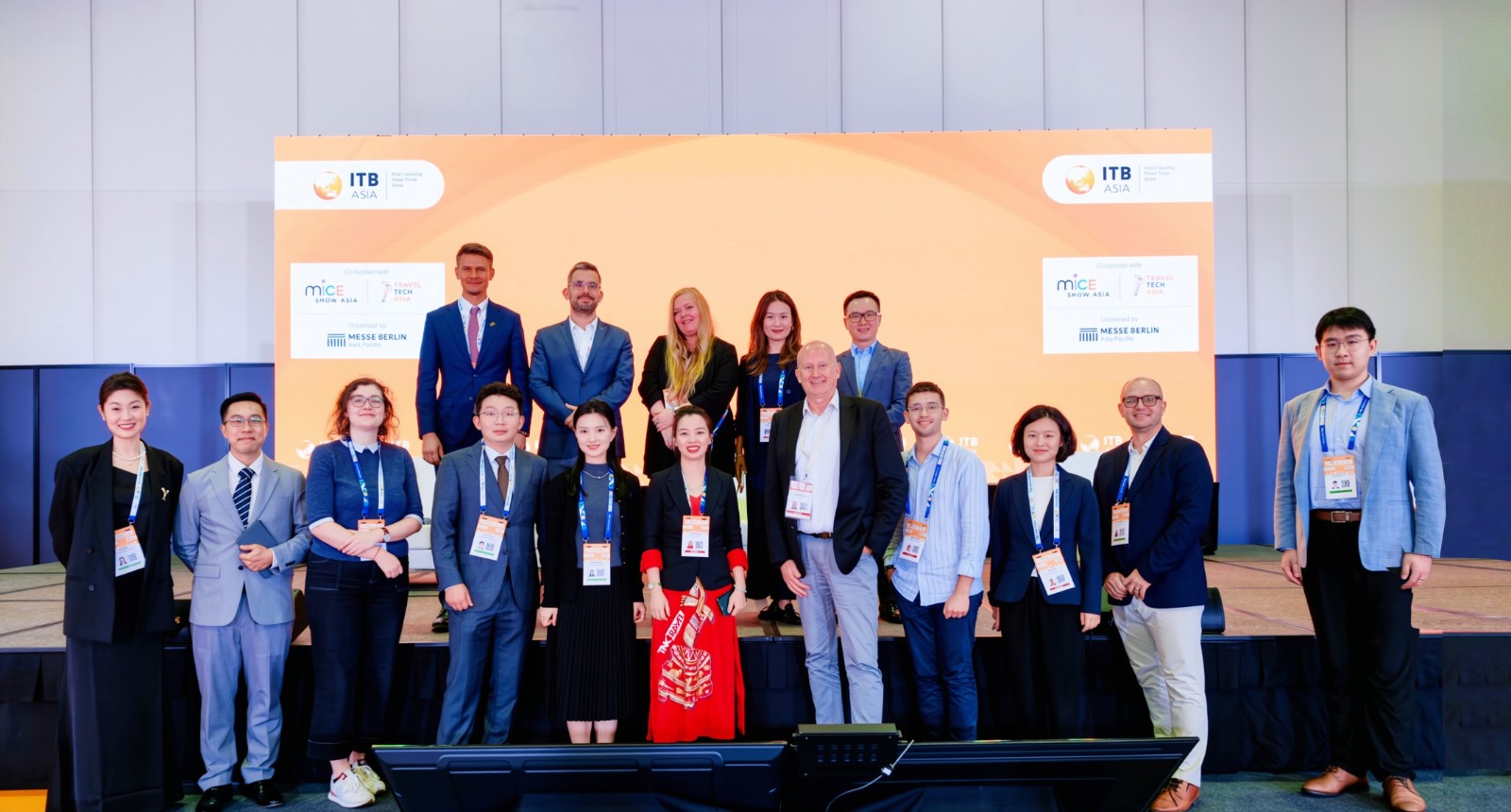
On 21 October, ITB Asia opened in Singapore, with the World Tourism Cities Federation (WTCF) ITB Asia Tourism Development Forum held the same day as the closing highlight of the first day's professional programme.
On 21 October, ITB Asia opened in Singapore, with the World Tourism Cities Federation (WTCF) ITB Asia Tourism Development Forum held the same day as the closing highlight of the first day's professional programme. Under the theme "China's Changing Travel Landscape: Opportunities and Challenges for Asia", the forum gathered nearly 100 industry representatives. Attendees included representatives from the China Cultural Center in Singapore and the China Tourism Office in Singapore, as well as heads of cultural tourism authorities and promotion departments of relevant cities, travel trade enterprises across the tourism value chain, media outlets, and academic and research institutions. Many representatives of exhibiting companies also stopped by for on-site exchanges.
The forum featured a dedicated presentation on the international standard ISO 11778:2025 Brand evaluation — Tourism city. Led by WTCF, the standard is the world's first international standard for tourism city brand evaluation, comprising 8 first-level indicators, 53 second-level indicators, and 121 supporting city scoring criteria. Pilot work is currently under way, and the standard will soon be rolled out and applied across tourism cities worldwide.
The forum also showcased the inbound tourism and cultural tourism resources of Beijing, the founding city of WTCF. Unlike previous presentations that focused on traditional sightseeing resources, this session highlighted a "digital-intelligent Beijing", showcasing how cutting-edge technologies such as artificial intelligence and big data are being applied in the cultural and tourism sector, and presenting The Release of Top 10 Sci-Tech Application Scenarios for Cultural and Tourism in Beijing. Centred on the end-to-end travel experience of visitors, the scenarios cover the full traveller journey — smart trip planning, seamless passage, intelligent touring and immersive experiences — addressing the needs of visitors, business operations and city governance. They vividly reflect the technological sophistication and innovative vitality of Beijing's cultural tourism, drawing keen interest from industry participants, many of whom took photos and asked for details.
In the roundtable discussion, Franka Gulin, Relevant Representatives of the European Travel Commission (ETC); Monica Wu, Senior Marketing Manager at the Malta Tourism Authority; Roy Lou, Chief Operating Officer at LLVision; and Lukas Pokorny, Regional Director for China and Southeast Asia at the Czech Tourist Authority (Czech Tourism), exchanged views on the changing behaviour of Chinese tourists and how destinations can respond.
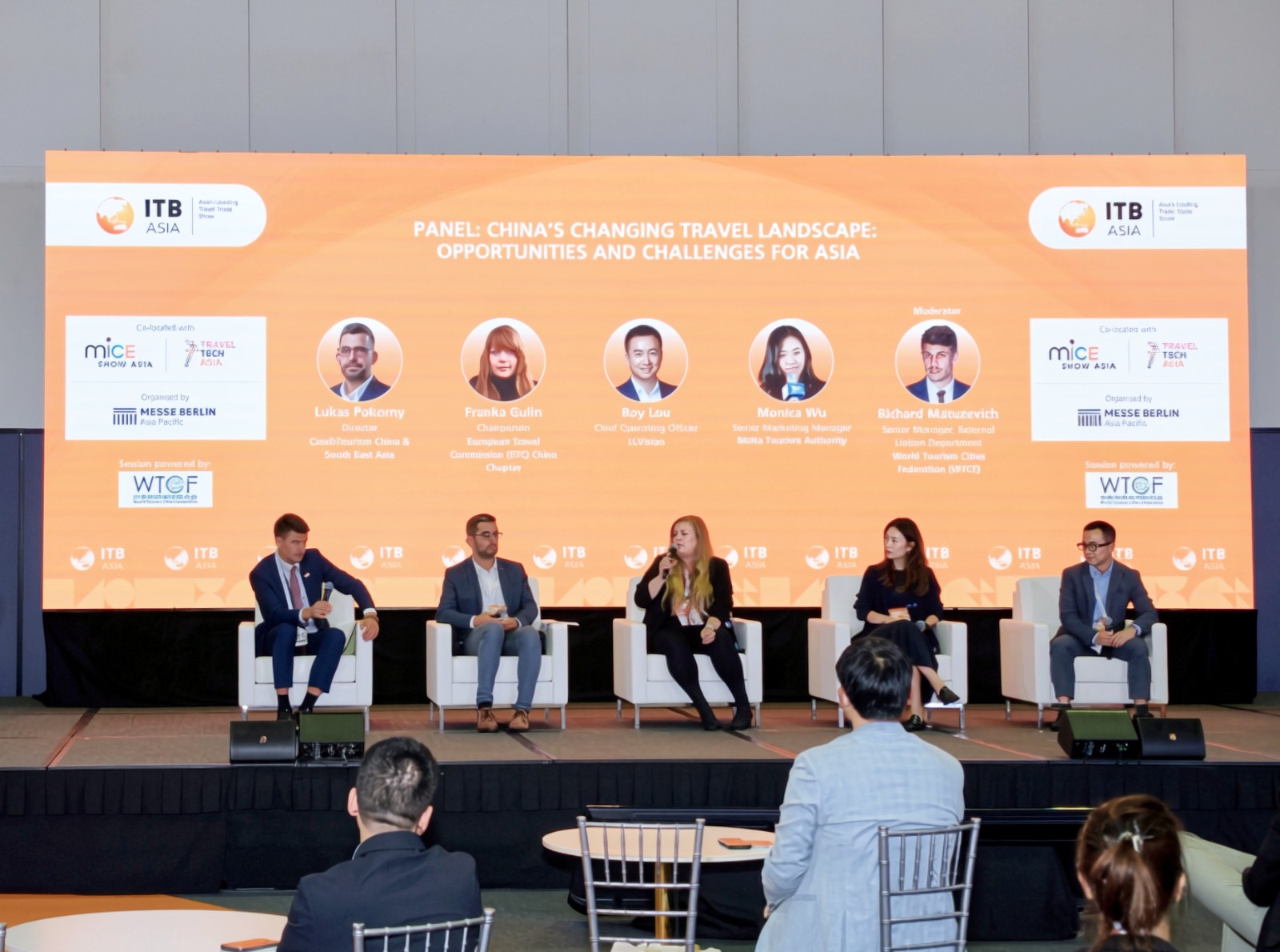 Franka Gulin noted that China's tourism market has undergone profound adjustment in recent years, and the long-held overseas impression of China as a market for "group sightseeing and shopping" is being refreshed by more refined and diversified demand. She argued that overseas destinations should proactively study China's experience in digital payments and service facilitation, and adapt the basics — payments, transport and accommodation — to keep pace with the changing needs of Chinese tourists.
Monica Wu observed that China has the world's largest outbound tourism market, and travellers are increasingly seeking authentic, locally rooted in-depth experiences. As a small-scale niche destination, Malta's approach is to work closely with core Chinese travel trade partners, train front-line sales staff, and maintain a consistent brand image on digital channels such as WeChat and Xiaohongshu, reaching target customers precisely within a limited budget.
Lukas Pokorny observed that group itineraries from China to Europe are shifting from "whistle-stop tours" stringing together five or six countries in one trip to deeper stays of two or three, with on-site duration extending to around four days, and demand for small groups, slow travel and richer experiences keeps rising. He noted that the Czech Republic is developing new products — wine tourism, crystal craft experiences and short wellness retreats — to draw visitors beyond Prague. The key for a destination, he said, is to tell its own story well.
Roy Lou shared how AI translation smart glasses are being applied to break down language barriers. He noted that the value of smart hardware can only be experienced first-hand by users, and suggested starting with B2B scenarios such as conferences, hotels and travel agencies, integrating deeply with urban tourism resources so that visitors can feel the convenience of the technology in real travel settings.
Organised by Messe Berlin (Asia Pacific), ITB Asia is the Asia-Pacific extension of ITB Berlin, the world's largest travel trade show. This edition brought together over 1,000 exhibiting brands and 1,500 professional buyers from the Asia-Pacific, Europe, the Americas and the Middle East. Singapore, a global hub for tourism and MICE, connects the Asia-Pacific with the world. As the closing event of the trade fair's opening day, the forum received high praise from ITB. ITB noted that WTCF has rich experience in organising conventions and exhibitions, that the forum's theme speaks directly to industry concerns, and that the event delivered strong results, and expressed the hope of deeper and broader cooperation in the future.